What is TB-500?
TB-500 is a synthetic peptide based on a fragment of Thymosin Beta-4, a naturally occurring protein involved in tissue repair. In research it is studied for its systemic, body-wide effect on recovery — a contrast to the localised action of BPC-157.
What is TB-500 researched for?
In preclinical animal studies, TB-500 has been investigated for:
- Cell migration — helping repair cells move to where they are needed (Goldstein; Malinda)
- Muscle and soft-tissue regeneration — across multiple tissue types at once
- Angiogenesis — the formation of new blood vessels
- Inflammation — reducing systemic inflammation
- Flexibility and connective tissue
What is the difference between TB-500 and Thymosin Beta-4?
Thymosin Beta-4 is the full naturally occurring protein; TB-500 is a shorter synthetic fragment that carries the active region responsible for much of the tissue-repair and cell-migration activity studied in research. The two names are often used interchangeably, but they are not identical.
How does TB-500 work?
TB-500’s active fragment binds actin, a protein central to cell structure and movement. In research this is linked to improved cell migration, new blood-vessel formation and tissue regeneration throughout the body, rather than at a single site.
Research summary
| Research area (animal / preclinical) |
Reference |
| Cell migration & tissue regeneration |
Goldstein et al.; Malinda 1999 |
| Angiogenesis |
Malinda 1997 |
| Cardiac / tissue repair |
Bock-Marquette 2004 |
| Mechanisms review |
Crockford et al. |
Further reading: Why TB-500 and BPC-157 shouldn’t be pre-mixed
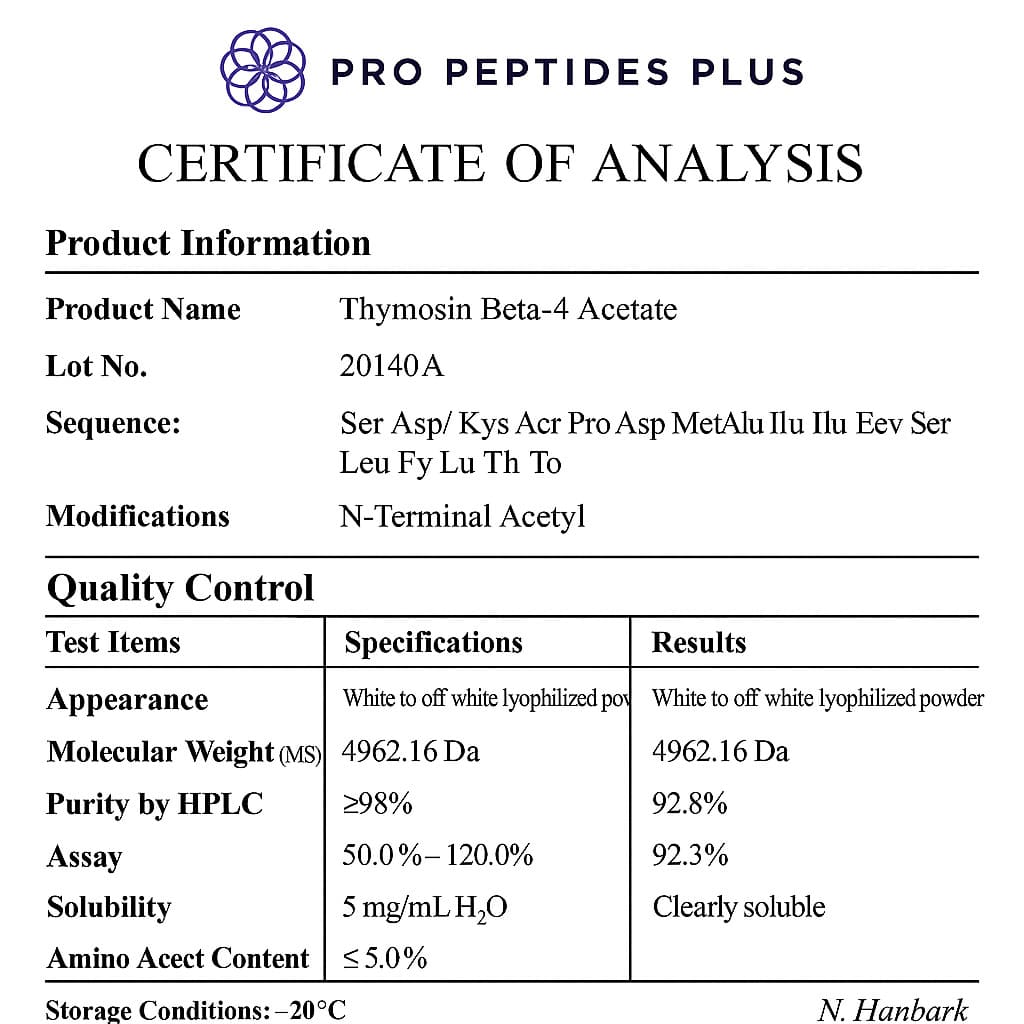
Molecular Formula: C212H350N56O78S
Molecular Weight: 4963.4 g/mol
View on PubChem